
The generic “use it or lose it” letter goes to everyone with insurance, says nothing about the patient, and most of them land in the recycling. The letter that gets a reply names the patient’s remaining benefit, the treatment the doctor recommended, and the date the money disappears.
Three templates follow. Each one needs four fields filled from your practice software: remaining benefit, planned treatment, estimated patient share and plan year end. The end of year benefits page shows where those fields live in Open Dental, Dentrix and Eaglesoft.
Template 1: early October, first notice
Subject or heading: Your dental benefits for this year
Dear [First name],
We checked your dental insurance this week. You have about $[remaining] of your annual benefit left, and it expires on [plan year end]. Unused benefit does not carry over.
When you were last in, Dr. [Name] recommended [treatment, in plain words, e.g. a crown on a lower right molar]. Based on your plan, your share would be around $[patient share] if it is completed before the end of the year.
Our schedule in November and December fills quickly. Please call us on [phone] or reply to this message, and we will find a time that suits you.
Kind regards, [Name], [Practice]
Send to every patient on the list. Post for patients without an email on file; email for everyone else. Keep it to one page.
Template 2: 1 December, second notice
Subject or heading: Four weeks left on your dental benefits
Dear [First name],
A short reminder: your remaining dental benefit of about $[remaining] expires on [plan year end], four weeks from now.
We still have a few appointments available for the [treatment] Dr. [Name] recommended. The estimated cost to you is around $[patient share] this year. After the reset, your deductible may apply again and the full fee could be yours to pay.
Call [phone] and ask for [Name]. If this year does not work, we can book January now so your new benefit is used early.
Kind regards, [Name], [Practice]
Send only to patients who have not booked. Do not send a second notice to anyone who has already said no; log the no and move on.
Template 3: mid December, last call (short, text or email)
Hi [First name], it’s [Name] at [Practice]. Your dental benefit of about $[remaining] expires [plan year end]. We have [day, time] and [day, time] open for your [treatment]. Reply with the one that works, or call [phone]. Thanks.
This one goes only to patients with a pending treatment plan, remaining benefit of $300 or more, and an open conversation (a call back date, or a voicemail left). Check your state’s rules and the patient’s consent before texting.
When do you send each one?
| Template | Date | To whom | Channel |
|---|---|---|---|
| 1 | First two weeks of October | Everyone on the list | Post and email |
| 2 | 1 December | Not yet booked, not declined | Email, post for no-email |
| 3 | 10 to 15 December | Pending plan, $300 or more left, open conversation | Text or email |
Benefits that renew mid-year get the same three letters on their own calendar, which is one more reason to keep the plan year end correct in the insurance record.
How do you track replies?
A sheet with one row per patient and six columns: sent 1, sent 2, sent 3, booked (date), completed (date), paid (date). The last three columns are the ones that matter, and they are the difference between found and recovered.
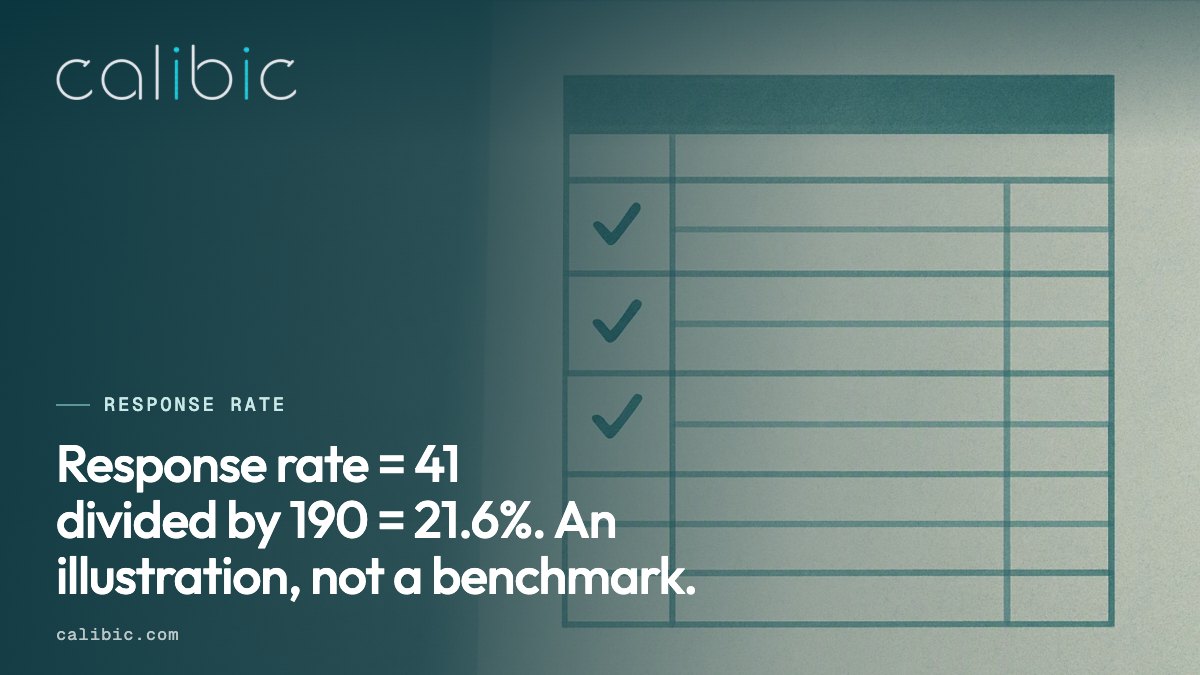
A worked example. 190 letters sent in October. 41 patients booked by 15 December. 33 completed treatment by 31 December. 29 had paid by 15 January. Response rate = 41 divided by 190 = 21.6%. Recovered, strictly, is the 29 whose treatment the software shows as completed and paid. If the average completed case was $1,050, recovered revenue is 33 multiplied by $1,050 = $34,650 in production, of which the 29 paid cases are collected. These figures are an illustration, not a benchmark; your numbers depend on your list.
What to avoid
- Naming a dollar amount you have not checked against the current plan. One wrong estimate costs more trust than ten letters earn.
- Sending to patients whose plan year is not 31 December.
- Sending to patients with no planned treatment and no overdue recall. There is nothing for them to book.
- Health detail in a text. Keep texts to the benefit and the appointment.
What Calibic adds
The insurance benefits list is LIVE. Calibic reads insurance plans, remaining maximums and treatment plans from Open Dental, Dentrix and Eaglesoft (read-only, it never changes a record) and produces the list the letters go to, with each patient’s remaining benefit, planned treatment and plan year end ready to fill in. It also shows booked, completed and paid as separate counts, so the sheet above keeps itself. Sending the letters and texts from Calibic is coming; today your team sends them.
Next step: size the opportunity first with the expiring benefits calculator.